Metal Detecting Data: Spot Patterns Across Your Hunts
Finds per hunt, keeper rate, top locations, VDI distribution, depth bands — here is how simple stats reveal patterns your memory would miss.
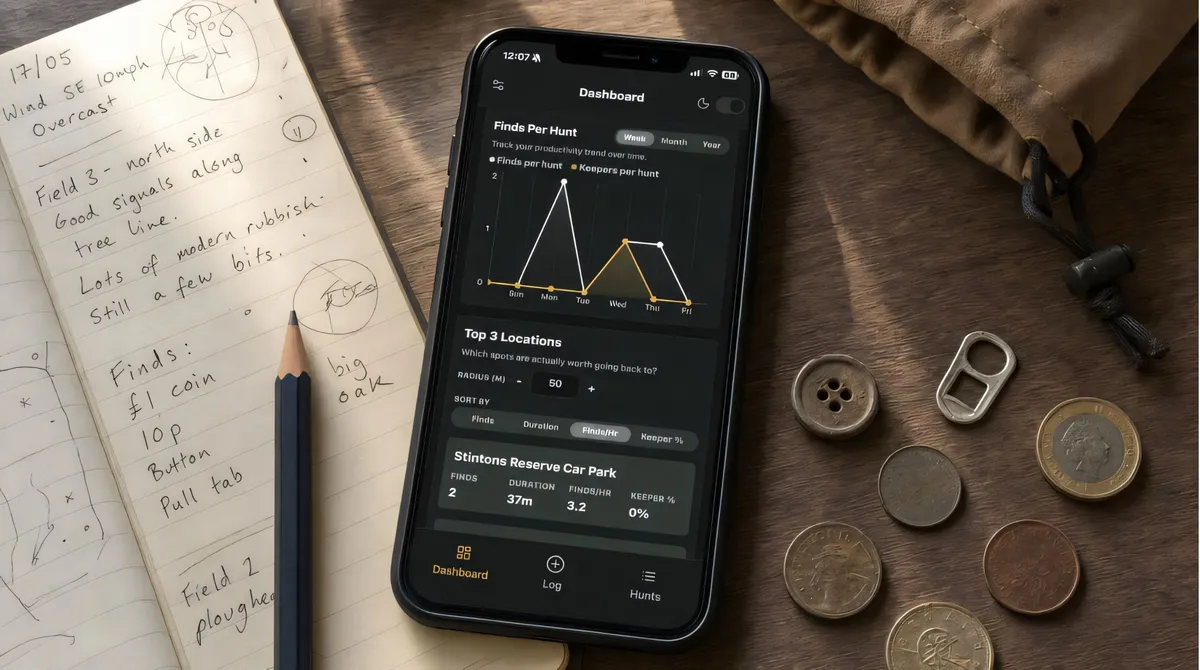
Memory is a terrible analyst. It remembers your best day in vivid detail and quietly forgets the forty average ones that actually hold the patterns. That’s the gap data fills. You don’t need to be a numbers person — you just need a handful of simple stats that turn dozens of hunts into clear, useful answers about where to go and what to do.
Here are the stats worth watching, and the decision each one should change.
Finds per hunt
The simplest measure of output: how many finds you’re averaging per trip. On its own it’s just a number, but tracked over time it shows whether you’re improving, and compared across sites it shows which ground is actually producing. Decision it changes: where to spend your next free afternoon.
Keeper rate
The share of your digs that are worth keeping. This is your efficiency signal — high keeper-rate sites reward your time; low ones might need a different approach or a pass. We cover the nuances in the keeper-rate guide. Decision it changes: whether a site’s worth returning to, and how you work it.
Hours per keeper
Finds per hunt and keeper rate don’t mean much without time. An hour for a keeper at one site versus four at another tells you where your effort actually pays. Decision it changes: how you budget your hunting time.
Top locations
Rank your sites by keepers, by keeper rate, or by total finds and the picture gets honest fast. The spot you think is your best often isn’t the one the data crowns. Decision it changes: which permissions to prioritise and which to retire.
VDI distribution
Chart the VDI numbers of your finds and the junk-versus-keeper ranges separate out — for your soil, not a generic chart. You learn which numbers to trust and which to treat with suspicion at each site. Decision it changes: your dig-or-skip calls in the field.
Depth bands
Group your finds by depth and a common blind spot appears: a lot of detectorists discover their keepers cluster shallow because they’ve been quietly skipping deeper, fainter signals. Decision it changes: whether to slow down and chase depth.
Conditions and settings
Line your results up against soil, weather, and your detector settings and the real relationships surface — which configurations correlate with keepers, how rain affects your depth, which soil types produce. Decision it changes: what you run, and when you go.
The point isn’t the chart — it’s the decision
Stats are only useful if they change what you do. For every number, ask the same question: what decision should this change? If the answer’s nothing, ignore it. If the answer’s “hunt the east field after rain with higher sensitivity,” that’s a stat earning its keep.
Let the app do the maths
Here’s the good news — you don’t build any of this by hand. Log your hunts and finds, and DetectingLog does the aggregation: dashboard stats, a top-locations leaderboard, finds per hunt, VDI distribution, depth-versus-keeper charts, and — with Premium — the settings effectiveness matrix, weather correlation, soil performance, and target-type trends. Export it all to CSV whenever you want.
Your only job is the part that takes a few seconds per hunt: logging consistently, and keeping it private. The patterns take care of themselves.
Frequently asked questions
What metal detecting stats are worth tracking?
The most useful are finds per hunt, keeper rate, hours per keeper, top locations, VDI distribution, depth bands, and how soil, weather, and settings line up with your results. Each one should change a decision — where to go, what to run, or how deep to dig.
How does data make you a better detectorist?
It surfaces patterns across dozens of hunts that no one can hold in their head — which sites actually produce, which settings work in which soil, and whether you're digging deep enough. You stop relying on gut feeling and start making decisions backed by your own history.
Do I need a lot of hunts before the stats are useful?
Patterns start emerging around ten hunts and get sharper from there. You don't need to backfill years of history — just log consistently from now on, and the data builds itself into something genuinely useful surprisingly fast.
Keep reading
Private by Default: Be Careful Sharing Detecting Locations
Why detectorists should keep their sites private — landowner trust, site preservation, theft risk — and how local-first logging protects your spots.
How to Document Finds with Photos, Notes, and Context
Good find records are worth more than the finds. Here is how to photograph, note, and contextualise your detecting finds — and why not to over-clean them.